

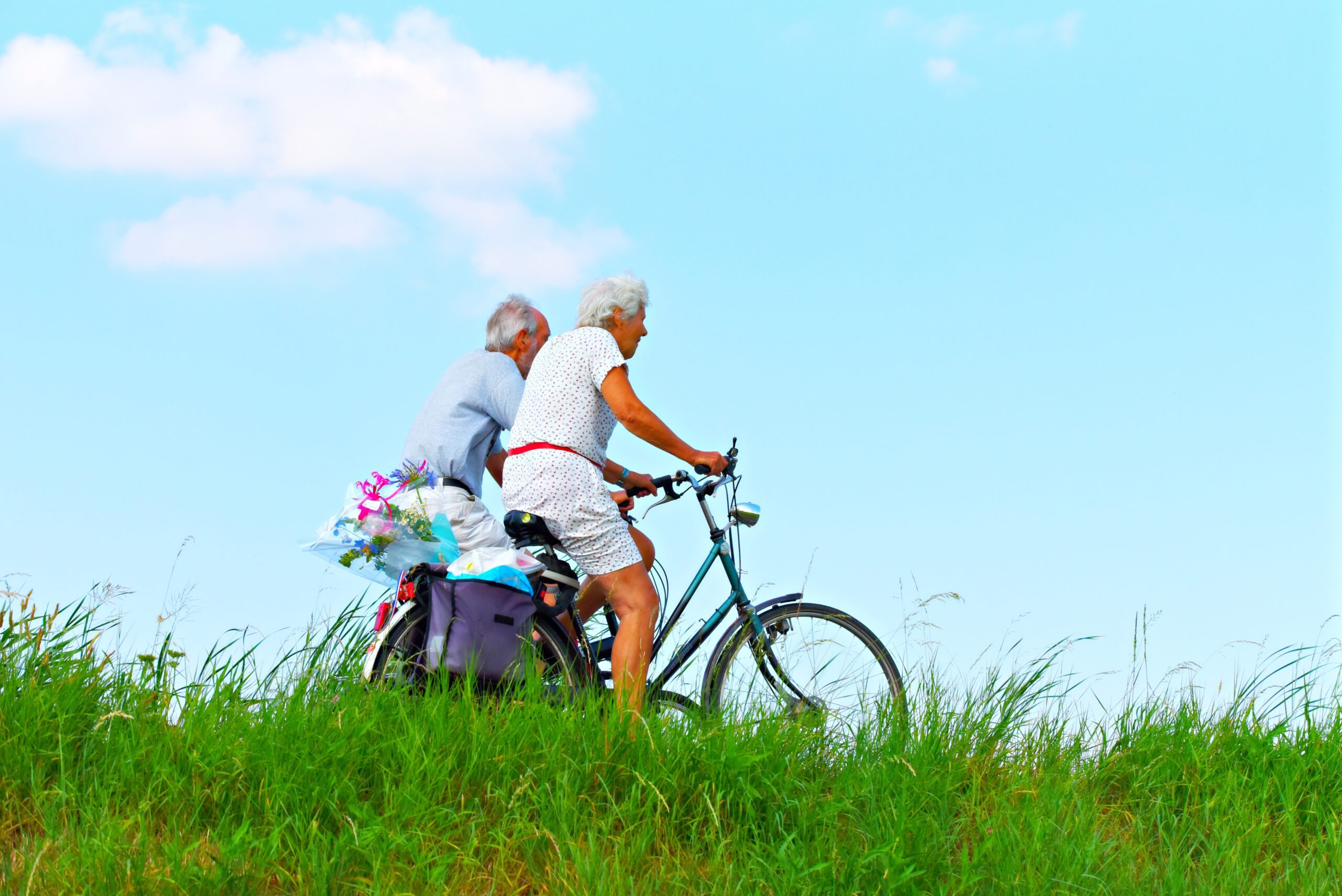
In the United States, we’ve been conditioned to believe that “getting old” naturally means getting frail. We watch our parents struggle with the stairs, or we notice that we’re the ones opting out of a long walk because our “knees aren’t what they used to be.”
But recent science tells a different story. The exhaustion and muscle softness you’re feeling isn’t just a birthday milestone—it’s a biological condition called Sarcopenia.
According to a landmark 2023 study in the American Journal of Clinical Nutrition, nutrition is the single most important factor in preventing this decline (Robinson et al., 2023). The problem? Most of us are eating the wrong “type” of fuel for an aging body.
What is Sarcopenia? (The “Silent Strength Thief”)
Sarcopenia is the progressive loss of skeletal muscle mass and strength. It is particularly dangerous because it often goes unnoticed until a person experiences a fall or a significant loss of independence.
Why Does Sarcopenia Happen?
As we age, our bodies enter a state called Anabolic Resistance. In this state, your muscles become “deaf” to the signals that tell them to grow. You might be eating the same amount of protein you did in your 30s, but because of Sarcopenia, your body can no longer “unlock” that protein to repair muscle tissue.
- The Result: Your body begins to “recycle” its own muscle for energy, leading to the weakness and fatigue that define Sarcopenia.
Movement as Medicine: Signaling Your Muscles to Stay
Nutrition provides the bricks, but movement is the “foreman” that tells those bricks where to go. You cannot fix Sarcopenia with diet alone; you must signal to your body that your muscle is still necessary.
Resistance Training vs. Sarcopenia
Many avoid “strength training” due to joint concerns, but a 2022 meta-analysis confirms that resistance exercise is a high-impact rehabilitative tool for those already dealing with Sarcopenia (Zhao et al., 2022).
- Functional Tension: Simple movements like squats or using resistance bands create the tension required to break through Anabolic Resistance.
- The “Force Multiplier”: Science shows that combining this movement with high-quality amino acids is the most effective way to reverse Sarcopenia symptoms (Robinson et al., 2023).
The Digestion Gap: Why Your Stomach Slows Down
A major hurdle in treating Sarcopenia is the “digestion gap.” When you exercise, your body diverts blood flow away from your stomach and toward your muscles to provide oxygen.
If you consume a heavy meal or a thick whey shake during this time, your digestion slows down significantly. By the time your body finally breaks that protein down into usable amino acids (often 2–4 hours later), the “metabolic window” for muscle repair has closed. For those with Sarcopenia, this delay means the muscle doesn’t get the repair it needs, leaving you feeling sore and exhausted the next day.
Comparing Your Options: Closing the Sarcopenia Gap
To effectively treat Sarcopenia, you need a protein source that bypasses the “slow stomach” and hits the bloodstream while your muscles are still primed for repair.
| Feature | Whey Protein Shakes | Standard BCAAs | Advanced Amino (EAA) |
| Utilization Rate | 17% – 32% (High waste) | Incomplete (Low) | 99% (Maximum) |
| Digestive Effort | High (Causes Bloating) | Moderate | None (Instant) |
| Sarcopenia Support | Moderate | Low | High (Direct Repair) |
| Absorption Speed | 2-3 Hours | 30 Minutes | 15-20 Minutes |
The Solution: Advanced Amino
This is where Advanced Amino becomes an essential tool in your Sarcopenia toolkit. It isn’t just “protein powder”; it is a precision-engineered formula designed to solve the problem of Anabolic Resistance.
- 99% Utilization: Unlike traditional proteins that create “nitrogen waste,” Advanced Amino is almost entirely used to build new muscle.
- Immediate Delivery: Because these are crystalline amino acids, they require no digestion. They reach your muscles in minutes, closing the “Digestion Gap” before your cellular gates close.
- Doctor-Formulated: Designed specifically to help the “Active Aging” demographic in the US maintain their independence and strength.
[Don’t let Sarcopenia steal your best years. Click here to see how Advanced Amino can help you reclaim your strength and mobility.]
Frequently Asked Questions About Sarcopenia
Can Sarcopenia be reversed after age 70?
Yes. While the process requires consistency, the 2022 meta-analysis by Zhao et al. proves that even elderly patients can see significant rehabilitation in muscle strength with the right resistance training and nutritional support.
Does Sarcopenia affect weight?
Often, yes. As you lose muscle (which burns more calories), your metabolism slows down, leading to “Sarcopenic Obesity”—where you gain fat even if you aren’t eating more.
Is Advanced Amino better for Sarcopenia than a regular diet?
While a healthy diet is the foundation, Advanced Amino provides the “missing link” by ensuring that the 8 essential amino acids are delivered in the exact ratio your body needs to trigger protein synthesis immediately.
Scientific References:
Zhao, H., et al. (2022). The Effect of Resistance Training on the Rehabilitation of Elderly Patients with Sarcopenia: A Meta-Analysis. Int J Environ Res Public Health. doi:10.3390/ijerph192315491.
Robinson, S., et al. (2023). The role of nutrition in the prevention of sarcopenia. Am J Clin Nutr. doi:10.1016/j.ajcnut.2023.08.015.